Anti-wrinkle injections are one of the most-requested treatments in aesthetics — but most people book them without really knowing what's happening under the skin. Here's an honest, jargon-free explainer: what they are, how they work, what the evidence says about safety, and the one thing that matters more than anything when you choose where to go.
What they actually are
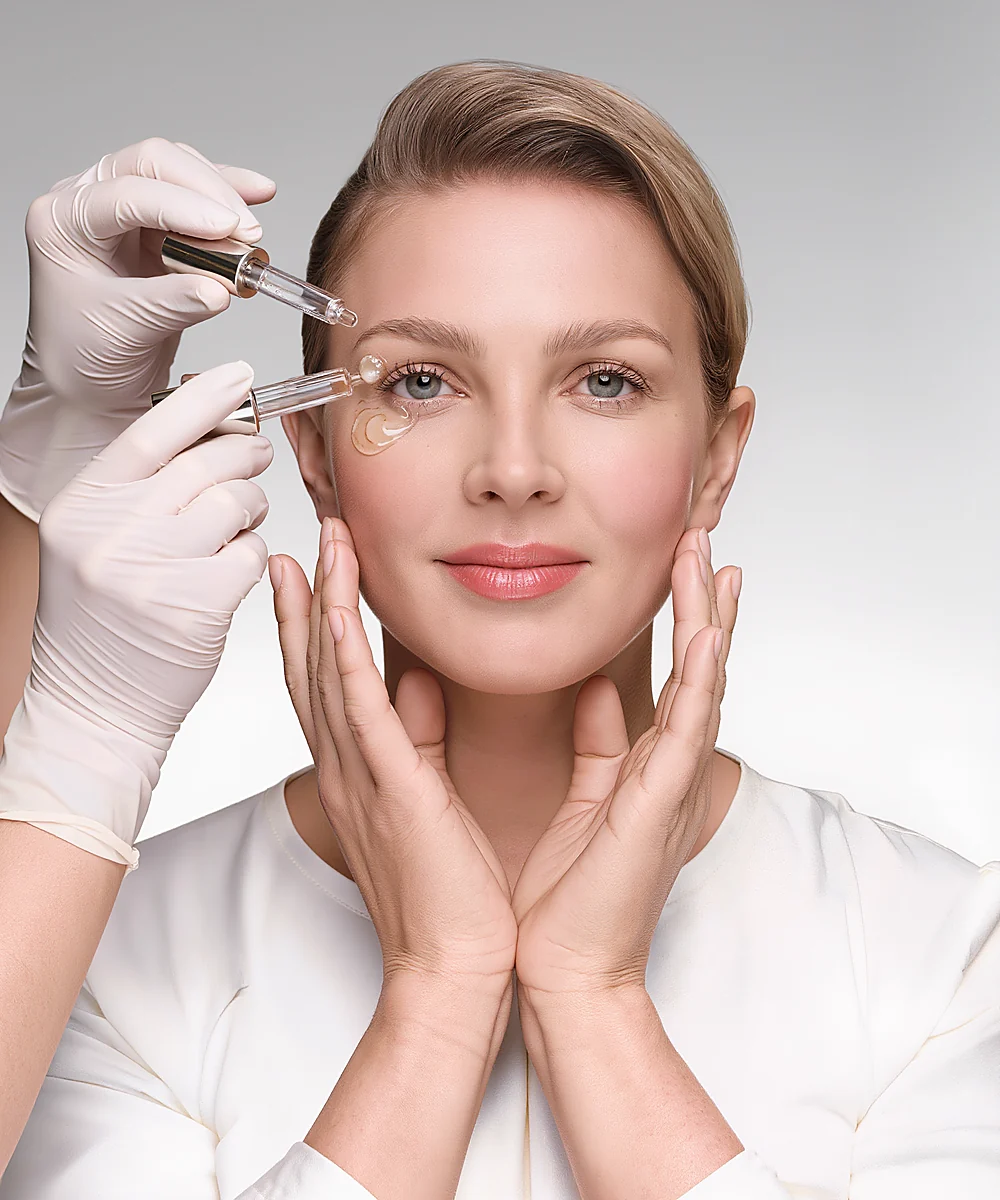
Anti-wrinkle injections — commonly known by the brand name Botox® — use a purified protein called botulinum toxin type A. It's a prescription-only medicine, so by law it can only be prescribed by a qualified medical professional after a proper assessment. In tiny, measured doses it's been used in medicine for decades — for migraines, excessive sweating and muscle spasms long before it was cosmetic.
How they work (the science, simply)
Your expressions are powered by muscles, switched on by a chemical messenger your nerves release called acetylcholine. Every frown or raised brow fires that signal; over years, the skin creasing over those muscles sets into a line.
Botulinum toxin gently interrupts the signal. At a microscopic level it blocks a protein (SNAP-25) that the nerve needs to release acetylcholine, so the "contract" message doesn't get through and the treated muscle relaxes. With less movement, the skin above creases less, and the line softens. It's temporary — the nerve endings gradually recover, which is why it wears off. It isn't doing anything to the skin itself, and it doesn't freeze your face permanently.
What it can — and can't — treat
This is where honest advice matters. Anti-wrinkle injections work on dynamic lines — the ones caused by movement, like frown lines between the brows, forehead lines and crow's feet. Soften the movement, soften the line.
What they don't do is fill volume or treat static lines — the creases that sit there even when your face is completely still, often from collagen and volume loss. Those are a job for dermal fillers or skin treatments, not toxin. Anyone promising that one injection fixes everything isn't being straight with you.
How fast it works, and how long it lasts
It's not instant. You'll usually notice a softening from around two to three days, with the full effect settling in at about two weeks. For most people, results last around three to four months before the movement gradually returns. With regular, consistent treatment over time, some people find the effect lasts a little longer, as the muscles are trained to relax.
Is it safe? What the evidence actually says
Botulinum toxin is one of the most studied substances in modern medicine, and when it's given correctly, its safety record is very well established. Most side effects are mild and temporary — a little bruising, redness or tenderness at the injection site, or occasionally a mild headache. Less commonly, a brow or eyelid can droop temporarily if the product spreads to a nearby muscle; this settles as the effect wears off. It's exactly why precise placement — and real knowledge of facial anatomy — matters so much.
But here's the honest, important part: the treatment is only as safe as the person and the product behind it. In mid-2025, the UK Health Security Agency investigated an outbreak of botulism — a serious illness — in North East England, with 25 people affected and 16 hospitalised after cosmetic anti-wrinkle injections. The investigation linked the cases to unregistered practitioners working from home, using an unlicensed product imported from abroad that was later found to contain 85% more toxin than its label claimed.
That isn't a reason to fear the treatment — it's a reason to be careful about who does it. Carried out by a qualified medical practitioner, with a licensed product, after a proper assessment, anti-wrinkle treatment is a world away from a kitchen-table bargain.
The UK law (and why it protects you)
A few rules are worth knowing, because they exist for your safety:
- It's a prescription-only medicine — it must be prescribed by a qualified prescriber after assessing you, not sold like a beauty product.
- Since the Botulinum Toxin and Cosmetic Fillers (Children) Act 2021, it's illegal to give anti-wrinkle injections or fillers for cosmetic reasons to under-18s in England.
- The government has announced plans for mandatory licensing of cosmetic practitioners — a sign the industry is (rightly) tightening up.
If a provider skips the assessment, won't tell you what product they're using, or has no medical prescriber involved, treat those as red flags.
Aftercare, briefly
Good aftercare helps your results settle. As a general guide: stay upright and avoid rubbing or massaging the treated area for the rest of the day, and skip strenuous exercise, saunas, heat and alcohol for around 24 hours. We'll give you specific advice for you at your appointment.
The bottom line
Anti-wrinkle injections are a well-understood, temporary treatment that softens the lines made by movement — no more, no less. Whether they're right for you, and where they'd genuinely help, is exactly what a consultation is for. Choose your practitioner first and the price second: a medical background, a licensed product and an honest assessment are what keep this safe and natural.
At EMA Aesthetics, anti-wrinkle treatment is carried out by Emilee, an NMC-registered nurse, with prescribing handled properly and a licensed product every time. Because it's a prescription-only medicine, we discuss it privately at your free consultation rather than advertising it.