
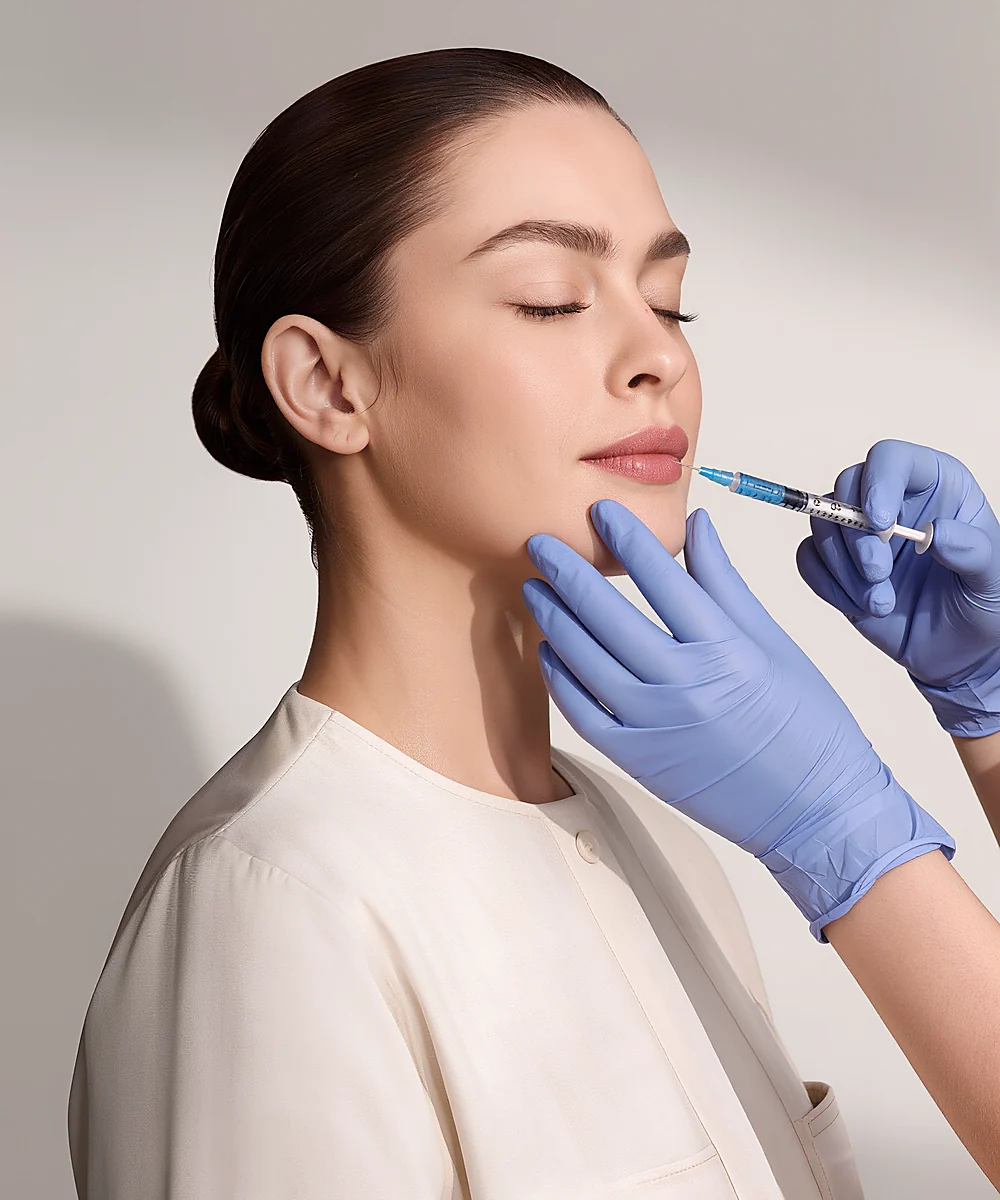
Dermal fillers are one of the most popular treatments in aesthetics — and one of the most misunderstood. Here's an honest, nurse-led guide to what they actually are, how they work, and the safety facts that matter before you book (including one most people don't know).
What they actually are
Most modern dermal fillers are made from hyaluronic acid (HA) — a sugar molecule your skin already produces naturally, and one of the things that keeps young skin plump and hydrated. In filler form it's a soft gel, injected to restore volume and structure that's been lost over time.
How they work (the science, simply)
Hyaluronic acid is remarkable at one thing: holding water — up to a thousand times its own weight. Injected into the skin, it adds instant volume and draws in water, which smooths, softens and hydrates the area. Over the following weeks, the gentle "stretch" it creates also nudges your own cells to produce a little more collagen. Manufacturers "cross-link" the HA so it holds its shape and lasts months rather than days.
What fillers can treat
Fillers restore or add volume — think cheeks, lips, jawline, chin, and softening the smile lines that run from nose to mouth. That's different from anti-wrinkle injections, which relax movement. Lines caused by lost volume are a job for filler; lines caused by muscle movement are a job for toxin. Often the art is knowing which — or which combination — you actually need.
How long they last
Typically six to eighteen months, depending on the area, the product and you. Mobile areas like the lips tend to break down faster. HA filler is gradually and naturally broken down by your body, so it's not permanent.
The safety part you really need to read
Here's the fact most people don't know: dermal fillers are not a prescription-only medicine. Unlike anti-wrinkle injections, they're classed as a medical device — which means, right now in the UK, there's no law stopping anyone from injecting them, even with no medical training at all. A government licensing scheme is on the way, but it isn't in force yet. So the responsibility to choose well sits with you — and it matters more here, not less.
Why it matters: the most serious risk with any filler is a vascular occlusion — filler accidentally entering a blood vessel and blocking blood flow. It's rare, but it can cause skin damage and, very rarely, affect vision, and it needs to be recognised and treated fast. That's exactly why real knowledge of facial anatomy — and a practitioner who can spot and manage a complication — is worth far more than a bargain price.
The reassuring flip side: HA fillers are reversible. If there's ever a problem, or you're simply not happy, an enzyme called hyaluronidase can dissolve them. It's one of the real safety advantages of HA fillers over permanent alternatives — but only useful in the hands of someone trained to use it. More common side effects are minor and settle: some bruising, swelling or tenderness, and occasionally small lumps that can be smoothed.
Why nurse-led matters here
With fillers unregulated, a medical background isn't a "nice to have" — it's the safeguard. At EMA Aesthetics your treatment is carried out by Emilee, an NMC-registered nurse with the anatomy knowledge to place filler safely, and the training to recognise and manage a complication if it ever arose. Fillers start from £90 per ml, and your exact plan is agreed at your free consultation. You can see full guide prices on our pricing page.
Aftercare, briefly
Avoid touching or massaging the area, and skip strenuous exercise, heat, saunas and alcohol for around 24 hours. A little swelling or bruising is normal early on. We'll give you tailored advice for you.
The bottom line
Dermal fillers are a safe, temporary, reversible way to restore volume — when they're done properly, by someone qualified. With this treatment especially, choose your practitioner first and the price second.