Non-surgical rhinoplasty — the "liquid nose job" — can refine the shape of the nose without surgery, incisions or real downtime. In the right hands it's genuinely impressive. But it's also the treatment where who does it matters most, so here's an honest, nurse-led guide — safety included.
What it actually is
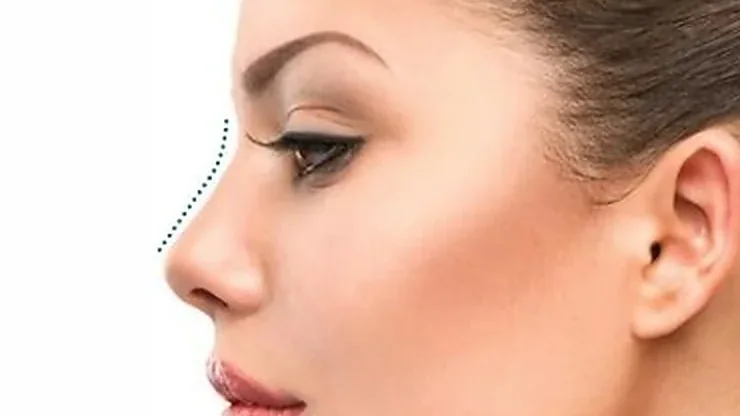
Non-surgical rhinoplasty uses tiny, precisely placed amounts of hyaluronic acid filler to reshape the nose's contour. By adding a little structure in exactly the right places, an experienced injector can create a straighter, smoother, more balanced profile — no cutting, no general anaesthetic, no recovery time.
What it can do
- Camouflage a small bump on the bridge — interestingly, by adding filler above and below it so the overall profile looks straighter, not by removing the bump
- Lift and refine a drooping or under-projected tip
- Smooth a shallow or uneven bridge and improve mild asymmetry
- Bring better balance between the nose and the rest of the face
What it honestly can't do
This is where straight talk matters. Non-surgical rhinoplasty adds volume — it cannot make a nose smaller. Any "slimming" is an optical effect from contouring, not a real reduction. It also can't correct a pronounced hump, significant deviation, or a breathing or structural problem — those need surgery. And it's temporary, not a permanent alternative to an operation. If reduction or a functional fix is your goal, we'll tell you honestly and point you towards a surgeon.
The safety part you must read
The nose is one of the highest-risk areas on the whole face to inject, and it would be dishonest to write about this treatment without saying so plainly. The nose is fed by blood vessels that connect, further up, with the vessels that supply the eyes. Very rarely, if filler enters one of these vessels (a "vascular occlusion") it can block blood flow and cause skin damage — and in extremely rare cases travel back toward the eye and cause serious harm, including loss of vision. Reported cases of filler-related blindness are concentrated at the nose and between the brows.
Now the context: these serious events are genuinely rare — well under 1% in the published data — and rarer still with a skilled, medically-trained injector who knows the anatomy, works slowly with tiny amounts in the safe plane, and is ready to act immediately if something looks wrong. HA filler is also reversible: an enzyme called hyaluronidase can dissolve it, and every responsible clinic keeps it on hand with an emergency protocol. This is precisely why, of all the treatments we offer, non-surgical rhinoplasty is the one where a bargain price should worry you most.
It's worth knowing that dermal fillers aren't a prescription-only medicine in the UK, so — for now — anyone can legally inject them, including into the nose. A licensing scheme is coming, but it isn't in force yet. Until it is, your safest protection is choosing a qualified medical practitioner.
How long it lasts
Because the nose barely moves, filler here tends to last well — commonly around 12 to 18 months, sometimes longer, though it varies with the product and you. And if you ever change your mind, HA can be dissolved.
On the day, and afterwards
Treatment is quick — usually 15 to 30 minutes — with numbing cream for comfort and anaesthetic in the filler, so most people find it very manageable. You can generally return to your day, with mild tenderness or swelling settling over a few days. Afterwards, avoid pressing the nose or resting glasses on it as advised, sleep with your head slightly raised, and rest from strenuous exercise for a couple of days. Contact us straight away if you notice severe or increasing pain, skin turning white, blue or mottled, or any change in your vision — these are rare, but they're treated as an emergency.
Who it's not for
It isn't suitable during pregnancy or breastfeeding, with an active skin infection, or with certain bleeding or autoimmune conditions, and it's generally avoided where the nose has had permanent filler in the past. It's also not the answer if you need actual size reduction or a breathing fix. A proper assessment is exactly how we work out whether it's right for you — or whether it isn't.
Nurse-led, for good reason
This is a treatment that rewards medical training more than almost any other. At EMA Aesthetics it's carried out by Emilee, an NMC-registered nurse with the anatomical knowledge and emergency preparedness this area demands. Non-surgical rhinoplasty starts from £180, and every treatment begins with an honest, no-pressure consultation. We're near Eccleshall, serving Stone, Stoke-on-Trent and Staffordshire.