If you've been researching "skin boosters," you've almost certainly run into both names — and a lot of confusing marketing telling you each one is the answer to everything. They're genuinely different treatments that do overlapping but distinct jobs. Here's a straight, nurse-led comparison so you can walk into a consultation knowing the right questions to ask.
The one-line version
Profhilo hydrates and bioremodels. Polynucleotides regenerate and repair. Both improve skin quality rather than adding volume like filler — but they get there by different routes, which is why one may suit your skin better than the other.
What Profhilo is
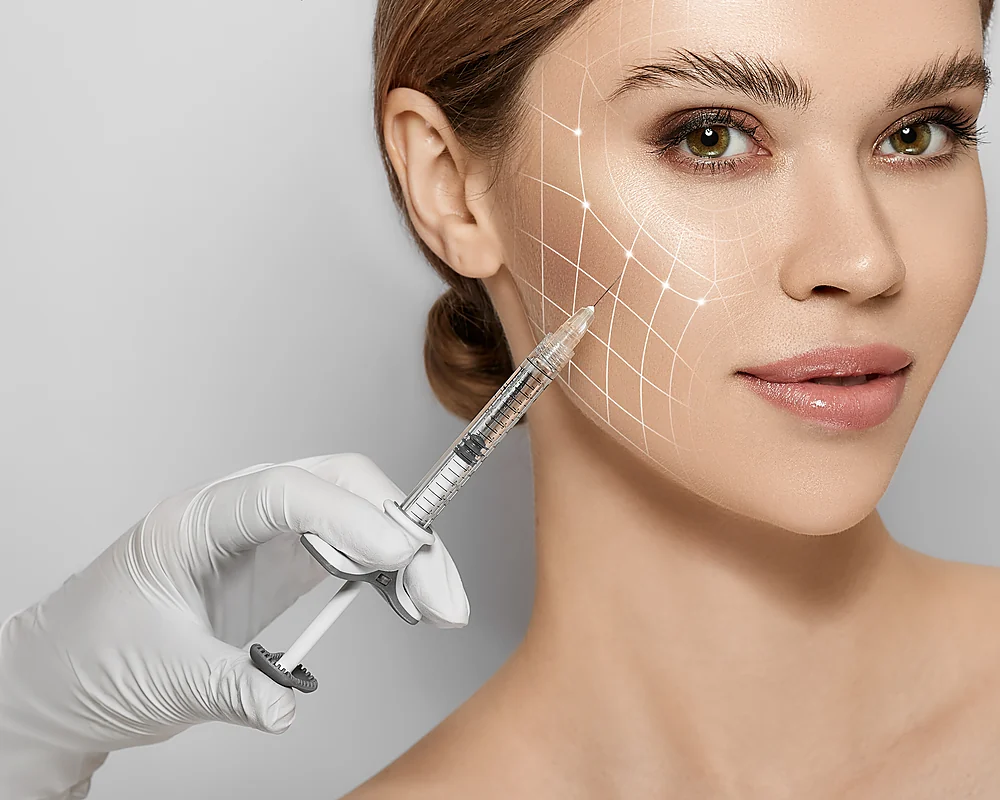
Profhilo is an injectable made of stabilised hyaluronic acid — but it doesn't behave like filler. Instead of holding its shape to add volume, it's designed to spread through the skin, releasing hyaluronic acid slowly to deeply hydrate and to stimulate your own collagen and elastin (this is what "bioremodelling" means). It's placed at a small number of set points and is best known for restoring an overall glow and a subtle firmness across larger areas — the face, and very often the neck and décolletage. It's typically two sessions about four weeks apart, then maintenance roughly every six months.
What polynucleotides are
Polynucleotides are purified fragments of DNA (the "salmon DNA" treatment — full explainer here). Rather than hydrating with HA, they signal your skin's repair cells to switch into a more active, regenerative state, while also calming inflammation and supporting the tiny blood vessels. That makes them a genuine repair treatment — particularly valued for thin, delicate or stressed skin, and for the under-eye area. They're usually a course of two to three sessions, two to four weeks apart, with maintenance every few months.
So which suits which concern?
As a rough guide — and it is only a guide, because your skin decides:
- Overall dullness, dehydration, mild laxity, "my skin's lost its glow" — and across bigger areas like the neck and décolletage → Profhilo tends to shine.
- Thin, delicate, crêpey, reactive or compromised skin, redness, or the under-eyes → polynucleotides are often the better fit.
- Dull, tired skin that's also thinning → genuinely could go either way, which is where an in-person assessment earns its keep.
Do you have to choose? (No.)
They're not rivals so much as teammates. Because one leads with hydration/bioremodelling and the other with regeneration/repair, they're frequently used together as part of one skin plan — polynucleotides to condition and repair, Profhilo to hydrate and firm. A sensible practitioner will sequence them to your skin and budget rather than sell you both by default.
An honest word on evidence
Both are well tolerated with good safety records in trained hands, and side effects are usually mild and short-lived (small bumps, occasional bruising). Both are newer than something like anti-wrinkle injections: the science is sound and results in clinic are consistently good, but they don't yet carry decades of data. We rate both — we'd just rather say that than pretend either is a miracle. And a reminder for polynucleotides specifically: they're derived from fish, so flag any fish allergy at consultation.
Why nurse-led matters
Neither treatment is a prescription medicine, so the law doesn't dictate who injects you. A medical background means a proper skin assessment, sterile technique, and — most importantly — honest guidance about which of these (or which combination, or neither) will actually move the needle for your skin. At EMA Aesthetics that assessment is done by Emilee, an NMC-registered nurse, near Eccleshall and within easy reach of Stone and Stoke-on-Trent.
The bottom line
Profhilo for hydration and glow across larger areas; polynucleotides for repair and delicate, thin or under-eye skin — and often a thoughtful combination of the two. Which is right for you is exactly what a skin consultation is for. If cost is on your mind, here's how much polynucleotides cost and how many sessions you'll need.